


Janus Lab Italy
Cristo Cade con la Croce
Cristo Cade con la Croce
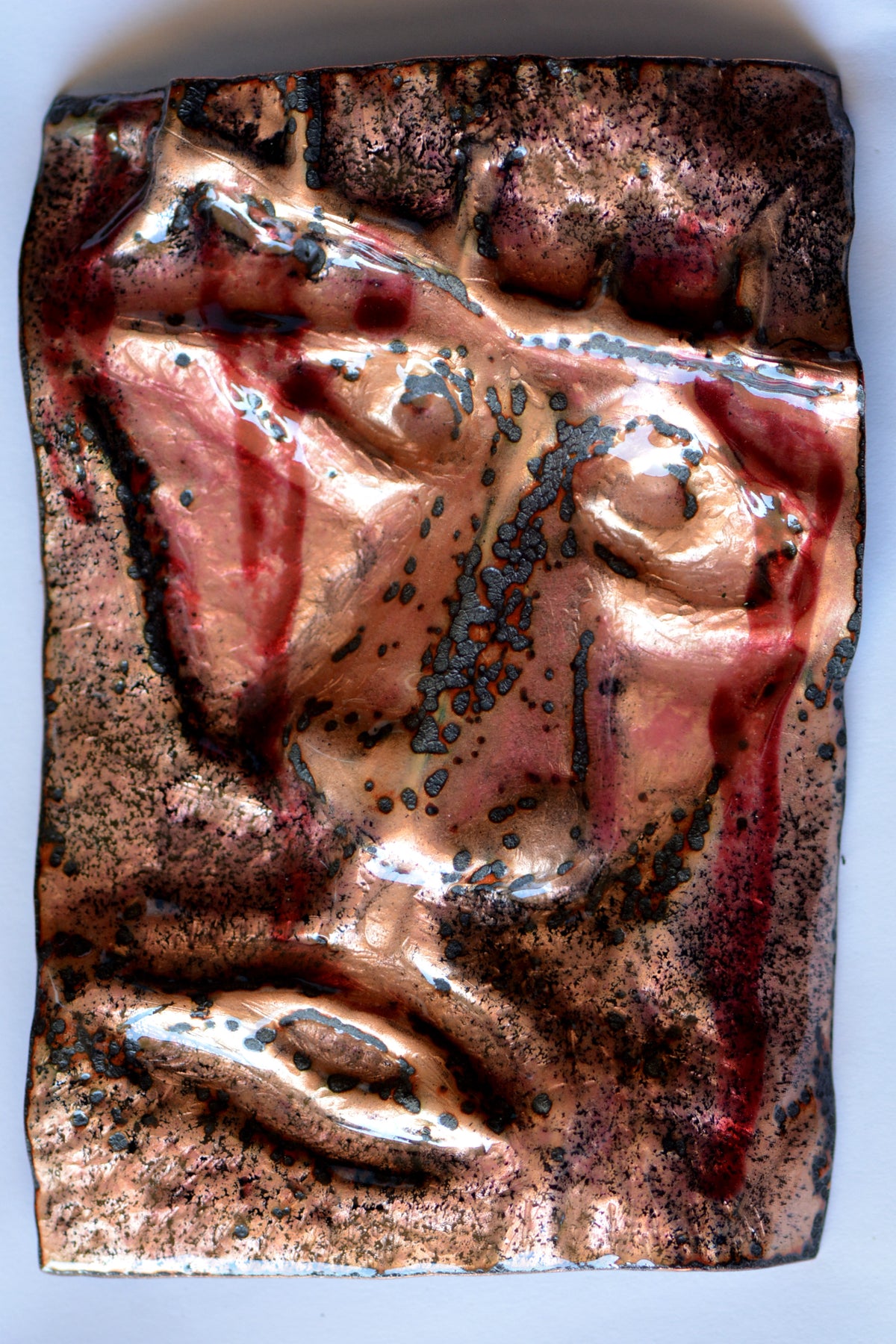
Inspired by a work by Gaetano Previati housed at the Diocesan Museum.
Jesus falls for the first time. The tension of the scene is contained within the constraints of the metal panel: the spatial dimensions must be precise. The angle of the face is carefully calculated in its reinterpretation of the original reference work. The context is kept minimal and essential. The plasticity of the material is emphasized and harnessed to convey the drama of the event. The material’s inherent plasticity—the depressions and protrusions on its surface, shaped by oxidation—serves to heighten the depth of the face, the intensity of the scene, the tragic nature of the suffering, and the expression itself. While a faithful, literal reproduction might capture the face’s features more accurately, it would obscure a personal interpretation of the expression. Furthermore, a perfectly sculpted surface in bare copper might satisfy the formal composition of the face, but it would fail to allow the material to express itself through its own evolution, deformation, and oxidation. A "perfect" face is not human; moreover, a purely sculptural approach would prevent the enamel from engaging in a dialogue with the copper. On a perfectly smooth, pre-formed surface, enamel would merely add a sheen—sitting atop the metal rather than truly combining or reacting with it. The copper is shaped using the *repoussé* technique, yet it employs a contrasting punch to deform the surface in a way that is calculated rather than strictly sculptural. This is not the work of a sculptor who merely removes, lowers, or rounds material; rather, it is the result of two opposing forces seeking balance upon a malleable surface. Streaks of red and oxide distort the face, accentuating its hollows. Black enamel, set against a transparent flux over the warm tone of the copper, frames the face, defining the beard and the head.
Share


Enamel - Le Grand Feu
“Smalti a Fuoco_ Un’arte di Sottecchio”
L'arte della smaltatura a fuoco è un'arte antica e molto complessa.
Radicata in gesti precisi e conoscenze acquisite nel tempo, ha trasformato, nel corso dei secoli, metalli semplici, come il rame o l'argento, in oggetti di grande valore e significato artistico. Oggi è in gran parte confinata a poche creazioni specializzate e viene spesso confusa con oggetti prodotti industrialmente o realizzati con smalti a base polimerica. Di conseguenza, rimane per lo più associata a prototipi estetici di stile tradizionale. Solo in rari casi si è liberata dall'estetica classica, dando vita a opere moderne realizzate con tecniche antiche, grazie a grandi artigiani, sebbene oggi quasi dimenticati. Queste sono le basi del nostro viaggio profondamente personale: non solo una riscoperta delle potenzialità dello smalto, ma anche una ricerca di un linguaggio nuovo e contemporaneo, che reinventi come la smaltatura a fuoco possa ancora oggi esprimere bellezza e raffinatezza.
The Origin of ...
Storie di antiche civiltà perdute nel tempo, dove le tracce iniziano a riaffiorare a causa del cambiamento climatico e del degrado ambientale. Sia nelle regioni ghiacciate che nelle foreste pluviali equatoriali, emergono nuovi segni di civiltà passate. Partendo da quelle stesse pietre scolpite – volti scolpiti da mani antiche – ho iniziato a interrogarmi sull'espressione umana: come rappresentarla, come darle forma. Ho iniziato a sperimentare la modellazione delle espressioni – imitando antiche reliquie – sul rame, scolpendo il metallo e ricreando quelle stesse linee. Il martello trasforma il materiale in due modi: da un lato espande e deforma la superficie; dall'altro, lascia segni ricchi di texture. È diventato inevitabile per me iniziare a scolpire volti veri, cercando di catturare le loro emozioni: la loro meraviglia, la loro tristezza e la loro gioia. Sono affascinato da come le antiche civiltà, e più in generale da come le culture, abbiano cercato di rappresentare i loro popoli: la loro identità, il loro simbolismo, il loro spirito. Questo è il percorso che segue questo progetto.